
Book design is the foundation of credibility before readers look at what they have written or their choice of book until readers find out whether or not the content has been written well. Therefore, in a competitive publishing environment, design plays an immediate and critical role in determining if a book is purchased. This means that design needs to be considered as a form of strategic communication rather than just an element of decoration.
The design of a book will create authority for the reader; it reinforces brand recognition and helps create long-term trust/loyalty with that book’s readership. A poorly constructed layout can undermine the quality of the text in even the best-written book. For that reason, authors and innovators in the publishing industry must master the basics of book design.
Why Book Design Is Important in Modern Publishing
Book design has increasingly become a critical differentiator in an overcrowded publishing market. Readers will quickly judge the professionalism of a book when they see its cover. If the book design is inconsistent with the book’s contents, the reader will quickly lose confidence in that book’s contents. As a result, there should be strategic implementation of publishing standard practices to establish credibility through publishing.
Reader Psychology and First Impressions
Visual hierarchy guides reader attention and shapes emotional perception instantly. Typography, spacing, and imagery influence whether a book feels authoritative or amateur. Visually aligned works instill the author with credibility, and this leads to a psychological effect- increase in purchase intent and long-term reader engagement.
Design: the Competitive Advantage in Self-Publishing
With self-publishing expanding rapidly through platforms such as Amazon Kindle Direct Publishing to create an increased level of competitive advantage in the marketplace, and with the decreasing cost of entry into a marketplace, visual quality becomes a major differentiator between works published by independent authors and those published by traditional publishers. Therefore, applying design concepts and principles strategically is now vital to the success of independent authors in competitive marketplaces.
Professionally Designed Books are Made Up of Core Elements
A book design is made up of a book’s structural page layout, typography system, and collective visual brand identity. These three elements need to intentionally align with the expectations of the genre, as well as reader actions. When these core elements are completed, they will create a sense of consistency between them, allow for clarity, and create a level of professionalism for a book.
Interior Layout Structure
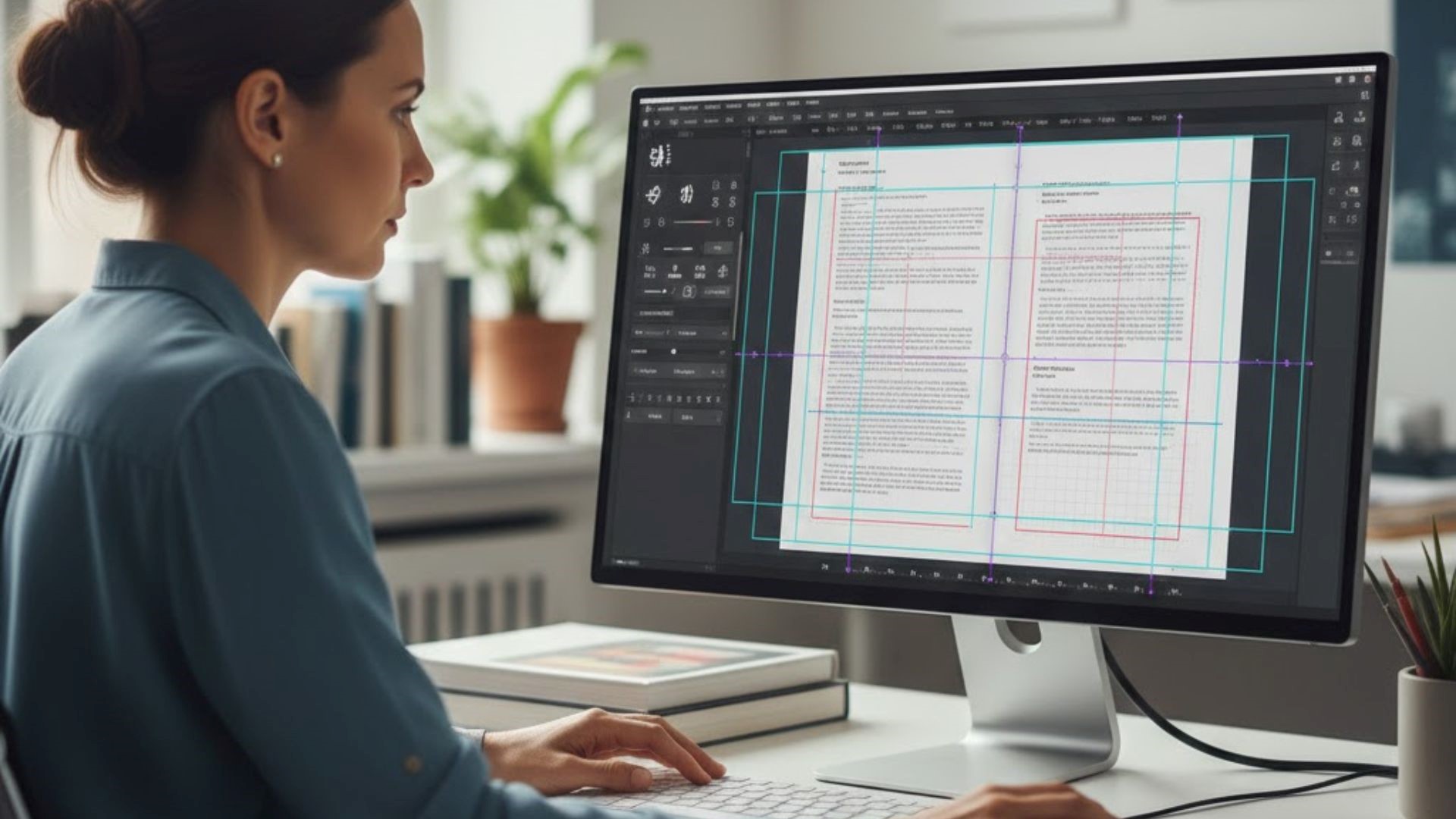
Interior layout establishes reading flow and cognitive comfort throughout the manuscript. Margins, spaces, and paragraph alignments should maintain proportionality throughout. White space, which refers to the empty areas on a page, should be intentionally preserved to prevent visual fatigue. Each chapter opening should be consistently formatted in order to establish a structural hierarchy.
Typography and Readability Standards
Typography will help set the overall tone for a work, while providing the most readable experience across digital and print formats. Serif typefaces are typically utilized in the creation of fiction works because of their high level of legibility during extended reading sessions; on the other hand, the majority of newly published nonfiction titles are created using sans serif typefaces. To enhance readability while not adding excessive visual distractions across paragraphs, line spacing needs to be maximized wherever possible. All headings/subheadings need to visually differentiate themselves from their next level of heading by font/type hierarchy.
Cover Design Strategy & Market Positioning
Designing covers is a way to establish your title’s branding and promote the book itself. Readers expect to see certain conventions within a specific genre; therefore, new product designs need to incorporate these conventions so that readers can identify items quickly and easily. Additionally, understanding how color and typography contrast can benefit users when searching for products to purchase in an online marketplace is very important.
If you are looking to increase your chances of being discovered by a potential customer, creating an eye-catching and easily recognizable thumbnail image is critical to your business success.
Tips for Designing Printed and Digital Product Layouts
The differences between the production of printed and digital products will affect the way you design each one. Therefore, it is essential that you design your layouts with these differences in mind as you create new products. Each type of product has its own layout and design restrictions; therefore, you need to format your products appropriately to maintain the integrity of your design.
Print Book Layout Considerations
Print books require precise trim size selection and margin calculation. Gutter space, which is the inner margin that accommodates binding, must be sufficient to prevent text distortion. The ‘bleed’ refers to the area that extends beyond the trim edge of a page; full-page (bleed) images should be set properly according to the publisher’s specifications for printed material (printers have bleeds too!).
eBook Layout/Reflowable Design
Reflowable is a layout used for eBooks to allow for adapting to the various devices on which eBooks are displayed. The text in an eBook has been set so that it will reflow and be displayed differently (and still readable) on each of the available display options. Only publications containing multiple images will use a fixed layout. Metadata is embedded to ensure proper classification and the ability to be found through search engines.
Platform Compliance and File Optimization
Distribution platforms indicate the formatting standards that must be used to achieve a consistent reading experience for all users. To avoid a file being rejected or displaying improperly, it must be accurately validated prior to submission. To ensure cross-platform compatibility and the satisfaction of readers, files should be tested on a minimum of three devices.
Trim Size, Margins, Page Layout

Page layout significantly affects comfort as well as aesthetic balance; therefore, it is critical when selecting trim size that your trim size selection adheres to established genre standards and meets readers’ expectations. Choosing an incorrect dimension for your book could lead to production or distribution issues.
Selecting The Correct Trim Size
Fiction books often use standard trade paperback trim sizes. Business books often utilize slightly larger trim sizes for authority perception. Consistency within an author’s catalog strengthens brand recognition.
Margin, Gutter, and Bleed Precision
Margins frame the text and make it easier to read in a smart way. Gutter spacing prevents written content from becoming obscured during the binding process. Bleed configuration ensures that images continue uninterrupted to the outer edges of each page. Both elements must be precise if they are to conform with established standards of professionalism in the publishing industry.
Uniformity in the series and visual branding.
A consistent use of visuals across all formats strengthens the author’s brand identity and builds trust between the authors and their readers. Series strive for alignment; doing so increases readers’ ability to recall series titles and can increase total sales for each series.
Creating an author brand identity
The typography, color scheme, and cover structure should all work together to make a single brand image. A design language that people can recognize makes them feel like they know you. As a professional author, you build trust by keeping things the same across formats.
Series Design Alignment
It is important to have a cohesive visual structure among all the books in a series. You can add some minor variations while still keeping the same base layout elements. This will help your books to be more easily found in online marketplaces.
Common Book Design Mistakes to Avoid
Many times, common mistakes will ruin an otherwise very solid manuscript. The majority of these errors result from not having enough understanding of formatting. A professionally done review process will greatly reduce the chances of your book having design-related issues.
Layout Inconsistencies
When a series has no consistency in the way they format headings it creates confusion as to the structural flow of the book for the reader. Creating uneven space throughout the chapters can create an imbalance visually. Such inconsistencies reduce perceived professionalism significantly.
Typography Errors
Using decorative fonts diminishes readability and genre alignment. Overcrowded pages generate fatigue and decrease reader retention. Typography must prioritize clarity above stylistic experimentation.
Cover Misalignment with Genre
Covers that contradict genre expectations confuse target audiences. Misaligned imagery may reduce click-through rates online. Market research should inform all visual decisions.
Professional Tools Used in Book Design
Advanced design software enhances precision and creative flexibility. Professional workflows rely on industry-standard tools for optimal output.
Industry-Standard Design Software
Both Adobe InDesign and Affinity Publisher are popular tools for producing complex printed layouts. Other types of tools can also be used to produce eBooks by providing eBook export optimizations and metadata integration.
When to Use Professional Designers
A skilled designer is extremely valuable when designing illustrated books because they have specific guidelines that must be followed. A publisher will also want the designer to ensure that the work complies with quality and other industry codes.
Professional design quality
When readers are happy with the quality of the design, they will be much more likely to return and recommend that book to others. More readers will stay on your website longer when what you have designed is easy to read. Typically, if a reader enjoys their experience, they will provide positive reviews and recommendations. Professional-quality designs also lead to fewer returns across all distribution channels.
Developing reader loyalty and build trust with them
When a design is organized, the reader will find it easier to read. As a result, the impact of the writing will be greater because there are fewer items competing for the reader’s attention. Consistent formatting sets standards that can be considered as trust builders.
Growth in Publishing Over the Long Term
A consistent design strategy helps publishing grow in a way that can be scaled. Authors who write more than one book benefit from established visual systems. When a brand can be recognized by consumers, they gain authority and loyalty over time.
When it comes to today’s publishing industry, book design is critical to creating a solid reputation. Book design shapes how people perceive the publisher and builds loyalty to their brand, thereby establishing the trust of readers. Publishers who have a systematic approach to designing their books are usually the most successful in today’s marketplace. By mastering layout precision, typography standards, and platform compliance, long-term success becomes significantly more attainable.
Professional Book Design Services
To design a book professionally, you need to be precise, follow the rules, and know what the market wants. To stay competitive, many publishing professionals choose to work with experts. Pen2Publishing offers structured formatting for the inside of a book, aligning the cover, and optimizing the book for distribution. Strategic design implementation builds trust and helps publishing grow over time. Collaborating with experienced professionals ensures your manuscript meets current industry levels of expectation at all times.
FAQs
1. What is the most important element in book design?
Typography and layout consistency are the most critical factors influencing readability and professional perception.
2. What is the impact of book design on the results of selling a book?
Books with professional design help people feel trustworthy, spend more time on the page, and leave more positive reviews.
3. What are the great choices available for choosing the trim size for my book?
The trim size is determined by the distribution outlet and the respective genre platform standards.
4. Do you need to use different design methods for eBooks than for print books?
It is true that eBooks need to be formatted in a way that lets them flow easily and be read on a computer screen.
5. Can poor formatting lead to distribution rejection?
Improper formatting may cause platform rejection or negatively impact reader experience.