

Most authors concentrate on writing, editing, and cover design before publishing a book. However, book size is an important factor that is frequently disregarded. Your book’s size has a direct influence on its readability, publishing costs, and even marketability. Knowing the history of book sizes helps you make more informed choices in the current self-publishing environment. It’s not just about looking back. Book sizes have changed over time to accommodate the demands of readers, publishers, and technology, from prehistoric scrolls to contemporary print-on-demand platforms. Selecting the appropriate trim size may have a big impact on your book’s success if you intend to publish it.
The Origins of Book Sizes
From Scrolls to Bound Books
Prior to the advent of today’s book, all information had been recorded utilizing either papyrus or parchment as the basis of scrolls. Though scrolls were useful, they were very difficult to read and transport from place-to-place. With the development of the codex where multiple pages were attached together, it became much simpler for readers to quickly locate their reading material by turning to the correct page. This ultimately allowed readers to become more streamlined and improved the workflow of reading books as well as created the standard book size for printed items today.
Early Printing and Size Formation
After inventing the printing press, books became much easier to obtain. The first printers printed a book by folding large sheets of paper into many pages; this determined what size the finished product would be.
Common formats included:
Folio – Large-sized books; usually for religious literature.
Quarto – Medium-sized books.
Octavo – Small, easy-to-carry books.
These original sizes have an influence on the physical size of books we use today.
Industrial Printing and Standardization
Publishers have required uniformity as the technique of printing evolved. Furthermore, each uniform size permitted publishers to decrease costs, create more efficient methods and enable a more constant means of distribution. Books in particular size categories also identified types of books (e.g. novels, scholarly books, manuals) with those respective categories.
Modern Book Dimensions
Today, book trim sizes are standardized based on reader preferences and publishing platforms.
Common sizes include:
- 5″ x 8″ – Ideal for fiction and novels
- 6″ x 9″ – Popular for non-fiction books
- 5″ x 11″ – Used for workbooks and educational materials
These sizes are widely accepted because they balance readability, cost, and convenience.
Why Book Size Matters in Self-Publishing
Choosing the right size is more than a design decision; it’s a strategic move.
Why You Need to Choose the Right Size:
- Reader’s comfort will be aided by using the correct size, which also helps in making your book easier to read.
- The cost of printing your book increases with each additional size.
- Different types of books (genres) have established industry sizes that readers will expect of those types.
- Using a standard-sized book will provide a more professional appearance than using a non-standard-sized book.
If your book is printed in an incorrect size, it may have issues of readability and be more expensive to produce than if printed in the proper size.
Popular Book Sizes by Genre
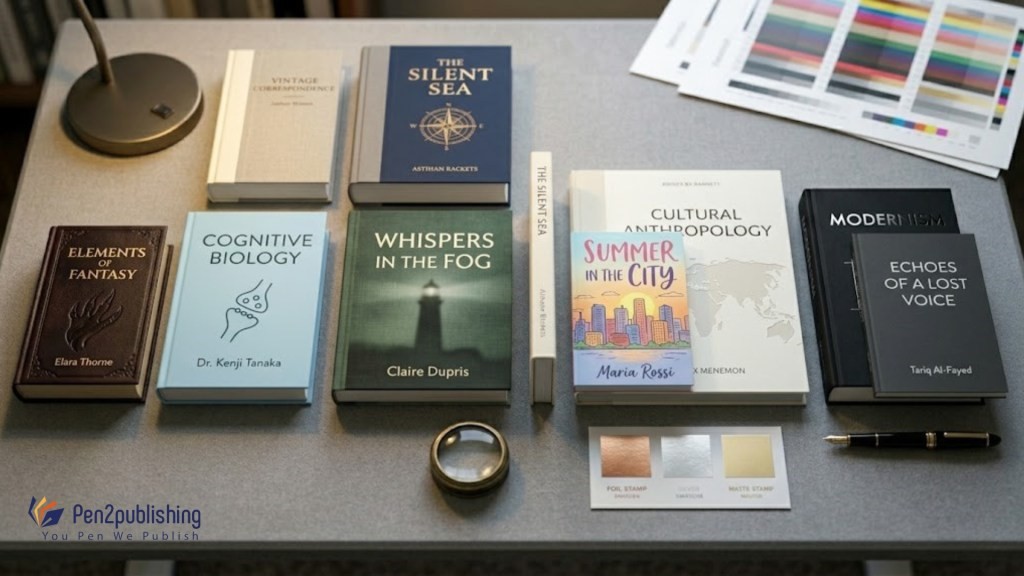
Understanding genre expectations can help you make the right choice.
Fiction Books
- Fiction books typically measure either 5″ x 8″ or 5.5″ x 8.5″.
- Simple and minimal effort to hold this format
Fictional Literature
- 6″ x 9″
- Professional appearance and organized layout
Children’s Literature
- 8″ x 10″ and larger
- Room to include illustrations
Teaching Aids
- 8 1/2″ x11″
- Perfect size for taking notes and doing exercises
How to Choose the Right Book Size
If you’re wondering, “What trim size should my book be?” You can consider the following when creating a book in the size of your choosing:
- Identify Your Genre of a Book; Different genres of a book will have varying size limitations on them.
- Know Your Audience as to how your book will be utilized by its purchasers.
- Think About Printing Costs; Affordability is important; however, you must keep in mind the quality of your printed product.
- Try Out Your Page Setup; Use various dimensions/layouts on your pages before you lock them in completely.
- Verify Platform Guidelines for the Required Size for your Book to be Published for sale.
Modern Trends in Book Sizes (2025–2026)
The publishing industry continues to evolve, and book sizes are adapting along with it.
1. Print-on-Demand Flexibility
Authors can now choose from a wide range of sizes without large upfront costs.
2. Multi-Format Publishing
Books should be created in order to have the same format and have the same book content to create an enjoyable experience for all readers, across multiple formats, such as…books, eBooks and audiobooks.
3. Reader-Focused Design
Publishers prioritize readability and user experience more than ever.
4. Unique Printing Options
Some authors utilize certain sizes to help them create a presence and dominate niche markets.
Main Errors Made By Authors When Choosing Book Sizes
-Not Selecting Your Book Size to Match Your Genre
-Not Considering Printing Costs
-Overcrowding in Content in Smaller Sized Format
-Not Testing Carefully Before Creating a Final Layout
By avoiding these errors, you can Optimize your Time, Save Money and Save Effort.
How Professional Support Can Help
Choosing the right book size may seem simple, but it plays a major role in your book’s success.
Professional guidance can help you:
- Select the best trim size.
- Optimize formatting and layout
- Ensure compatibility with publishing platforms
- Improve overall book quality
With expert support, you can confidently publish a book that meets industry standards and attracts readers.
Choosing the Right Book Size for Success

Books come in many sizes, and over time, the way we publish books has changed to keep pace with technology and our needs as readers. When we publish a book today, one of the most important decisions we make is choosing an appropriate size for that book. Your choice of size will affect how well people can read your book, how much it costs, and how readers perceive you as an author or publisher. By knowing about common standards, following best use of best practices, and staying on top of industry trends, you can determine an appropriate size for your publication, which will enhance the quality of your publication in the eyes of your audience and support your overall publishing objectives.
FAQs
1. What is the standard book size?
Standard book sizes are typically 5″ x 8″ for fiction and 6″ x 9″ for non-fiction.
2. Why does book size matter?
The size of a book has an impact on how easy it is to read, how much printing will cost, and how the final product will look.
3. What trim size should I choose?
When you choose a trim size, the following factors should be considered: the genre of the book, the intended audience of the book, and any requirements of the publishing platform.
4. Are eBook sizes fixed?
eBooks automatically adapt to any screen size, so the answer is no.
5. Can I use custom book sizes?
However, it is highly advisable to use one of the standard sizes for both the best compatibility with other books and the lowest cost of production.