
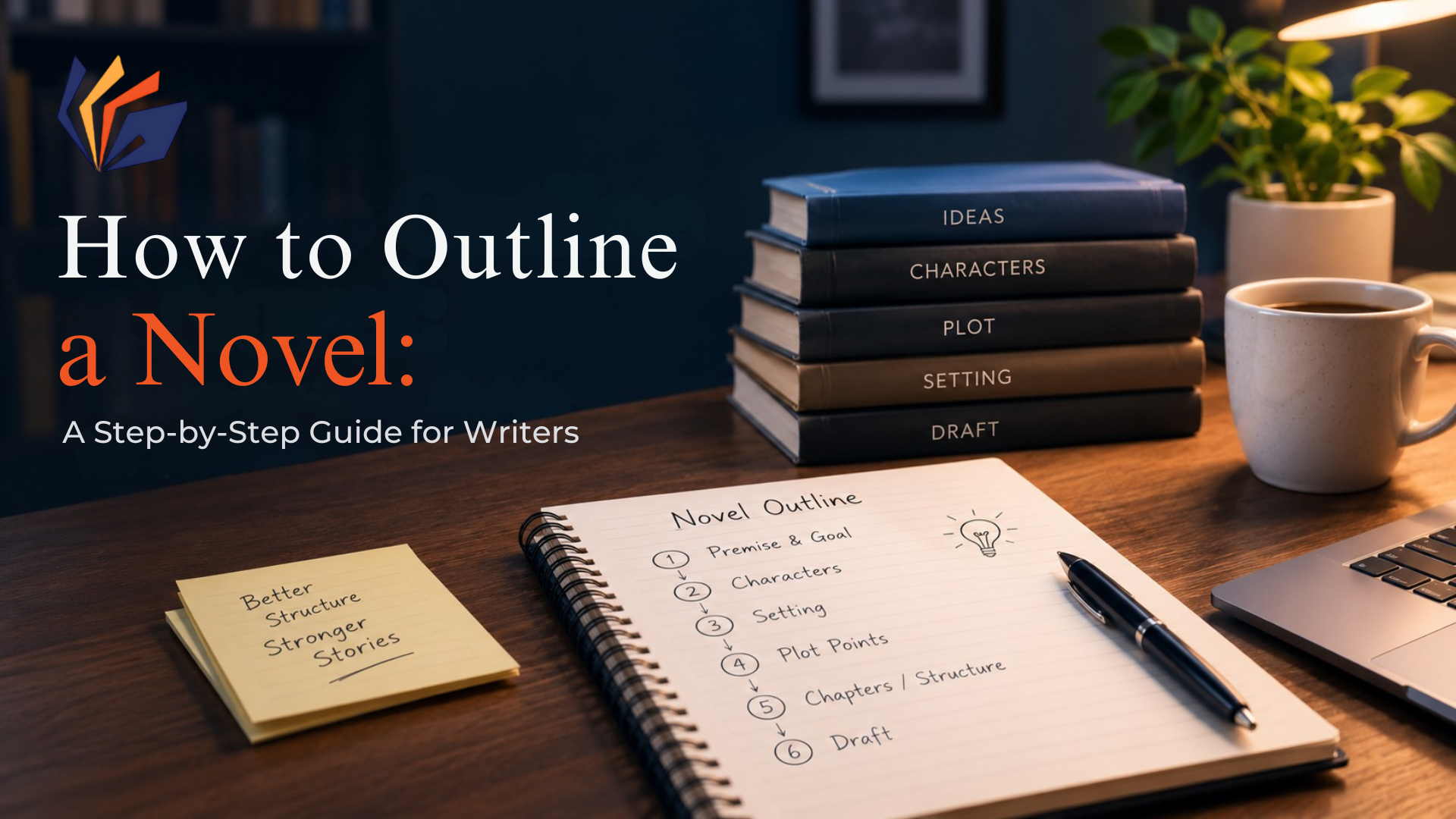
Every novel begins with an idea, but ideas alone don’t finish books. Somewhere around chapter six, many writers hit the same wall: the plot stalls, the characters drift, and the ending that seemed obvious in the beginning disappears. A novel outline is one of the most reliable ways to avoid that.
Writing a novel means managing tens of thousands of words, dozens of scenes, multiple characters, and a story that has to build toward a satisfying payoff. It’s difficult to keep all of the stuff in your mind. An outline gives you a map, so you can spend your creative energy on the writing itself instead of wondering what happens next. Whether you’re a first-time author or working on your fifth book, outlining can save you months of rewrites. And there’s no single “correct” way to do it.
What Is a Novel Outline?
And a new outline is a blueprint for your story. It tells you the major events, characters and turning points, in order of occurrence, from opening scene to final resolution. Depending on your style, it might be a single page of notes or a detailed chapter-by-chapter document.
Think of it as a blueprint. It isn’t the finished house, and you can move a wall or two while building, but it keeps the structure sound.
Why Writers Use Novel Outlines
Writers outline for practical reasons. An outline gives you clarity, because you know where the story is going before you commit to 80,000 words. It builds momentum, since sitting down to write is easier when you already know the next scene. It also strengthens structure, because pacing problems, plot holes, and weak middles are far easier to spot in a plan than in a finished draft. That means fewer rewrites: fixing a problem in an outline takes minutes, while fixing it in a manuscript can take weeks. Finally it keeps all the timelines, character motivations and story details consistent throughout the entire book.
Do You Need to Outline a Novel?
Not necessarily. Some authors, often called “pantsers” (they write by the seat of their pants), discover their story as they draft. Others, called “plotters,” plan almost everything in advance. Most writers land somewhere in between.
But even writers who resist outlining often benefit from a light framework: a clear premise, a rough sense of the ending, and a few major turning points. If you’ve started a novel and abandoned it halfway through, that’s a good sign you’d benefit from more planning.
What Should a Novel Outline Include?
Whatever format you choose, a solid outline covers four core elements.
Premise and the Main Conflict
Your premise is your story in simple terms, who your protagonist is and what they want, and what’s stopping them from getting it. The central conflict is the engine of the whole book. Without a strong, clearly defined conflict, even beautifully written scenes will feel aimless. A useful test is to state your premise in one or two sentences. If you can’t, the story may need more development before you start drafting.
Characters and Character Arcs
Plot is what happens to characters. Readers care more about the individuals than what happens to them. Your outline should identify your protagonist, antagonist, and key supporting characters, what each wants, what each fears, and how each changes.
A character arc is the change that occurs during the course of the novel. A timid character could become brash. A trusting character could become cynical. Mapping arcs early guaranties your characters develop and evolve, rather than remain static.
Setting and Worldbuilding
Everything from tone to conflict, where and when your story takes place, informs everything. For contemporary fiction, this may be as simple as a few notes on locations. For fantasy or science fiction, it can include magic systems, political structures, technology, geography, and history.
Include only what affects the story. An outline isn’t the place for every worldbuilding detail, just the ones your plot depends on.
Major Plot Points
Plot points are the turning moments that move the story forward: the event that kicks things off, the crises that raise the stakes, the midpoint shift, the climax, and the resolution. Identifying them in advance gives your novel a spine, and everything else hangs from it.
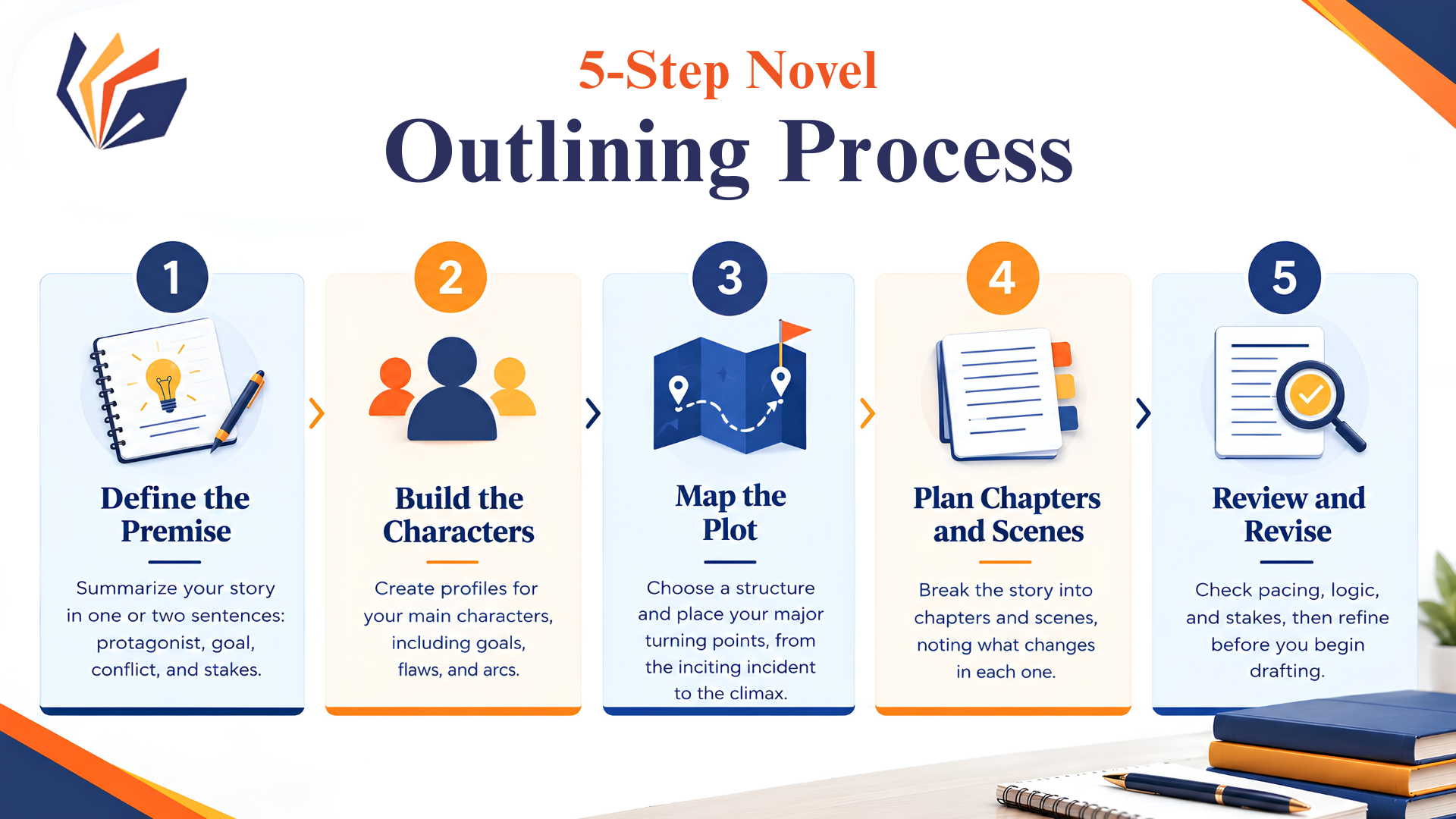
How to Outline a Book in 7 Steps
Here’s a practical process you can follow from a blank page to a finished outline.
1. Set Up Your Premise and Story Goal
Begin with the big picture. Ask who your protagonist is, what they want more than anything, what’s preventing them from getting it, and what happens if they fail. Then boil your answers down into a one- or two-sentence summary. This is your story’s anchor, and you’ll return to it whenever you’re unsure whether a scene belongs.
2. Develop Your Main Characters
Next, meet the individuals in your story. For each major character, note their goal (both external and emotional), their motivation, their flaw or fear, and how they’ll be different by the end.
You don’t need a 10-page character biography. A short profile for each major character is enough to make your outline feel grounded. Pay special attention to your antagonist. A well-motivated opponent creates far better tension than a villain who exists only to cause trouble.
3. Select a Story Structure
Structure is the scaffolding on which you hang your story. Popular possibilities include three-act structure, the hero’s journey, and numerous beat sheets. You don’t have to follow one precisely, but knowing the patterns that readers expect gives you the power to know when to follow them and when to undermine them.
At their most basic level, all stories have a beginning (setup), middle (rising action), and finish (climax and resolution). Find a framework that fits your genre and plot and use it as your scaffolding.
4. Map the Major Plot Points
Now use your critical turning points on that structure. Start with the opening scene, the world of your protagonist before things begin to go wrong. Then find the inciting occurrence thatinterruptsitandthefirst big turning point, the point of commitment of the protagonist to the trip. Next is the midway, a twist or revelation that affects the direction of the story. Then comes the crisis, or “dark moment,” the lowest point where all seems lost. Finally, design the climax, the final encounter or decision, and the resolution, which illustrates what life looks like once the core issue is resolved.
Once these are in place, you have a skeleton for your entire novel.
5. Break the Story into Chapters and Scenes
Then once you’ve mapped out the big beats, zoom in on them. Divide the story into chapters, then into scenes. For each scene, jot down who is in it, what happens, what changes by the end, and how it connects to the next scene.
That last point matters. Every scene should shift something: information, relationships, stakes, or the protagonist’s situation. If a scene changes nothing, it’s a candidate for cutting or combining with another.
6. Review & Expand Your Outline
Read through your outline with a critical eye before you start to draft. Are you building tension in the story or is it flat? Is the protagonist driving the action, or do things just happen to them? Are there gaps in logic or timeline? Does the ending deliver on the promise of the premise, and do the stakes keep rising as the story progresses?
Fix problems now, while it’s cheap to do so. Try handing your outline to a trusted reader or critique partner for input.
7. Start Writing and Keep Your Outline Flexible
An outline is a guide, not a contract. As you write, characters may surprise you and better ideas may appear. When that happens, update the outline instead of forcing the story back onto the old plan. A good outline evolves alongside your draft.
Choose the Right Outlining Method for Your Novel
There’s no universal best method. Here are five popular approaches, each suited to different writers.
One-Page Outline
One page. One sheet. One outline. That’s all you need to lay out your whole story, premise, characters, major plot points, and ending. It’s perfect for writers who want some structure to help keep them oriented without feeling boxed in. It’s also a good starting point that can be expanded later.
Snowflake Method
The Snowflake Method builds your story in layers. You start with one sentence, build it into a paragraph, then into character summaries, then into a full synopsis, and end with a scene list. Each level adds more information to the previous level . Like a snowflake expanding outwards . It’s fine for methodical writers who like to build up ideas slowly.
Three-Act Structure
The plot is structured in a typical way, divided into three parts: setup (Act One), confrontation (Act Two) and resolution (Act Three). The second act is generally the longest, with rising conflict and the middle twist. It’s basic, adaptable and fits just about any genre, so it’s a good pick for novices.
Character-Focused Outline
If the internal emotional arc of your protagonist is more important to your story than external events, outline it. Chart their beliefs, scars, and desires at the beginning. Then plot the moments that challenge and change them. This strategy works well for literary fiction and character-driven storytelling across any genre.
Beat Sheet
A beat sheet breaks the plot down into a sequence of distinct “beats” or crucial moments, each with a desired position in the book. Frameworks like Save the Cat provide us named rhythms like the opening image, the catalyst, the all-is-lost moment. Beat sheets give comprehensive pacing guidelines, yet leave opportunity for creative freedom in the scenes.
How to Outline Different Types of Novels
Genre shapes what readers expect, so it also shapes your outline.
How to Outline a Romance Novel
Romance is built on the relationship arc. Your outline should track how the couple meets, what draws them together, what keeps them apart, and how they ultimately resolve their differences. The key beats are usually the meet-cute, the building attraction, a big fight or misunderstanding, a black moment where the relationship looks doomed, and an emotionally rewarding ending. Romance readers expect a happy or hopeful ending, so plan toward it.
How to Outline a Mystery or Thriller
Mysteries and thrillers depend on carefully controlled information. Outline the crime or threat first, then work backward: who did it, why, and what clues point to the truth? Plan your red herrings, reveals, and twists deliberately. Because these genres rely on fair, well-placed clues, a detailed outline is especially valuable, and it’s easier to hide a clue in plain sight when you know exactly where it needs to go.
How to Outline Fantasy or Science Fiction
Speculative fiction requires you to balance story and world. Outline your plot as you would for any novel, then add a separate section for worldbuilding: rules of magic or technology, cultures, factions, and geography. Make sure your world’s rules create real constraints on the plot. The most satisfying speculative stories use their worlds to generate conflict, not just backdrop.
How to Write an Outline of Literary Fiction
Outlines tend to be looser in literary fiction, where the emphasis is often on theme, voice, and character interiority rather than plot mechanics. Focus on the main themes, the mental growth of the main character and some important events or pictures. You may outline by emotional beats or shifts in perspective instead of a traditional action-driven structure.
Common Novel Outlining Mistakes to Avoid
Even experienced writers stumble on these.
Too Much Detail in the Outline
It’s tempting to plot out every word of dialog and every movement, but over-detailed outlines can suck the joy out of drafting and leave no room for discovery. Aim for enough detail to guide you, not to replace the writing itself.
Focusing Only on Plot
A list of events isn’t a story. If your outline tells us what happens but doesn’t tell us why it matters to the characters, your finished novel might feel hollow. Weave emotional stakes and character development into your plan.
Ignoring Cause and Effect
Strong stories run on causality: this happens, therefore that happens. If your outline reads as “this happens, and then this happens,” the plot will feel episodic. Check that each major event is a direct consequence of the one before it.
Refusing to Change the Outline
Some writers treat their outline as sacred. But drafting reveals things planning can’t. If a scene isn’t working or a character is pulling the story elsewhere, revise the outline instead of forcing the draft to match.
Forgetting the Ending
Many outlines are detailed in the beginning and vague by the end. Yet the ending is what gives the story its meaning. Even if you don’t know every detail, decide on the emotional destination and final image early, so your story has something to build toward.
How Digital Tools Can Support Novel Outlining
Paper notebooks and index cards work well for many writers, but digital tools can make outlining more flexible, especially for longer or more complex projects.
Digitally Organizing Chapters and Scenes
With digital outlining tools you can drag and drop scenes, rearrange chapters, color code plot threads and collapse or expand sections as needed. You can rearrange a story in seconds, without retyping or reshuffling paper. This flexibility encourages experimentation, since you can try a different order without losing your original.
Editorial Collaboration Workflows Support
If you’re writing with a co-author, editor or critique group, cloud-based tools make collaboration a whole lot easier. Collaborators can leave comments directly on scenes, suggest changes, and track revisions in one shared space, with no more emailing multiple versions of the same file back and forth.
Keeping the Outline Connected to the Manuscript
The best setups keep your outline and manuscript together. When you can jump from a scene summary straight to the full text, or see your outline in a sidebar as you write, the plan stays a living reference instead of a forgotten document. Linking the two also makes revision easier, because you can quickly see how a change in one chapter ripples through the rest.
From Novel Outline to Publication-Ready Manuscript
An outline is the first step in a longer journey. Here’s what typically comes after.
Drafting and Manuscript Development
With your outline in hand, you can start drafting with confidence. Many writers set a steady word-count goal and work through the outline scene by scene. Don’t aim for perfection in the first draft. The goal is to get the whole story on the page, knowing you’ll refine it later.
Structural review and editing
Once the draft is done, the editing begins. First look at big picture (developmental) edits, structure, pacing, character arcs, consistency. Here your original outline is a good benchmark: compare the finished draft to it and see how the story drifted and if those changes made it better. After structural work come line edits and proofreading to polish the prose.
Print and eBook Formatting
Even a polished manuscript still needs formatting for publication. Print books need to pay attention to trim size, margins, page numbering and typography. eBooks need clean, reflowable layouts that can look good on any device. And cover design and metadata and file preparation. Many authors choose to work with professional self-publishing services to handle editing, formatting, and distribution, so they can focus on the writing.
Practical Tips for Creating a Better Novel Outline
Start small. Begin with a one-page summary and expand only as needed, and consider writing your ending first, since knowing where you’re headed makes every earlier decision easier. Ask “what if?” often, exploring alternatives before locking in plot points, and track character goals in every scene so each one moves at least one character toward, or away from, what they want.
Visuals help too. Patterns hidden in plain text can be revealed using timelines, index cards, mind maps and color coding. Build in flexibility by leaving space for surprises and revisions, and get feedback early, because a second pair of eyes can catch structural problems before you’ve written 50,000 words. Finally, revisit your outline continuously, updating it as your draft evolves to keep it useful.
Turn Your Story Idea Into a Novel
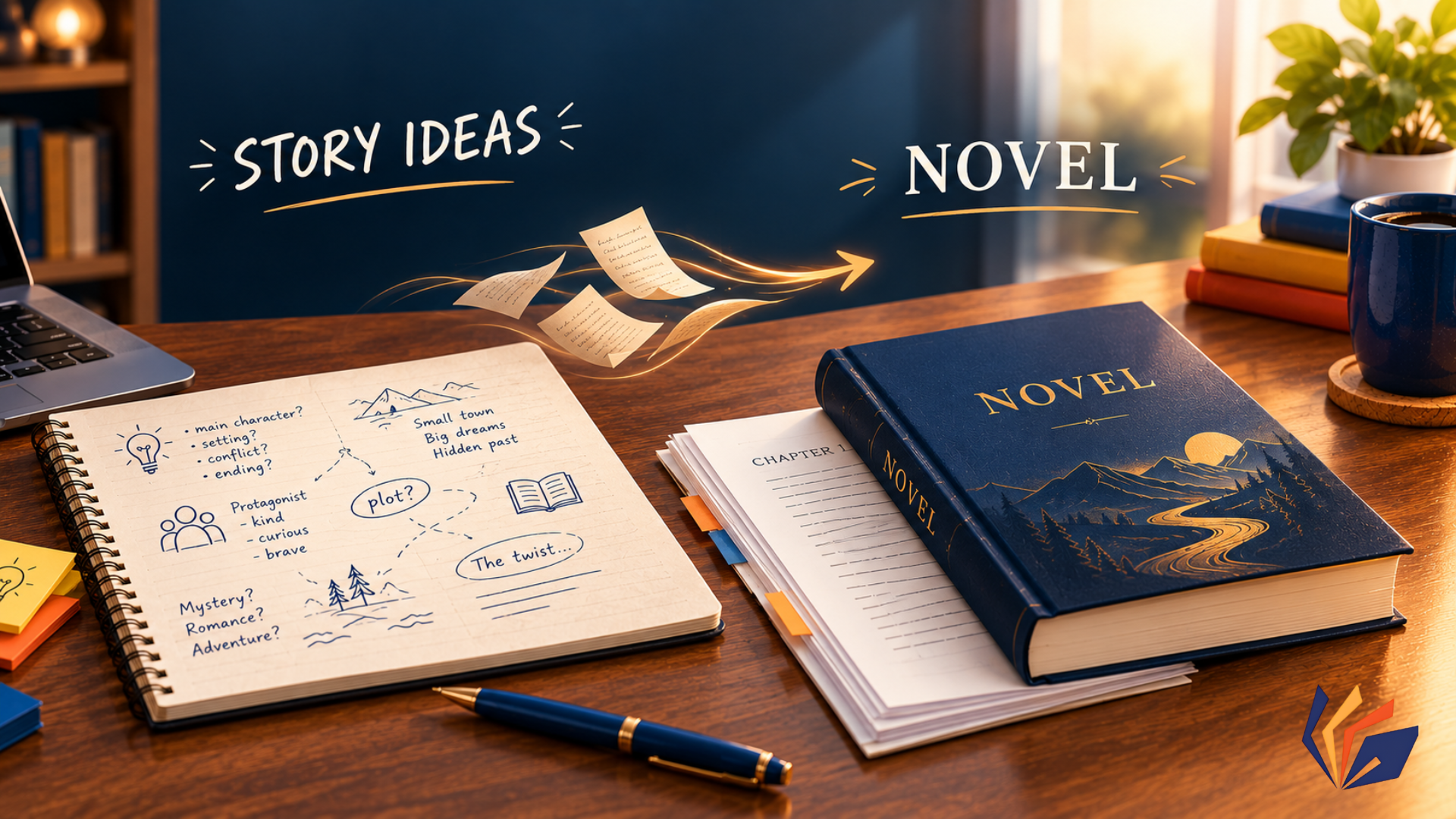
Outlining doesn’t take the magic out of writing. It gives your creativity a framework to work within. You turn a vague idea into a clear path to a finished manuscript as you define your premise, develop your characters, map your plot, and break the story into scenes. The best outline is the one that works for you. Try things, be open to change, and allow the plan to grow as your story does. Then take the next step: open a blank document, write that first line, and start building your novel.
And when your manuscript is complete and you’re ready to bring it into the world as a polished, professionally formatted book, the right publishing partner can help carry it the rest of the way.
FAQs
1. What Is the Easiest Way to Outline a Novel?
Start with a one-page outline. Write your premise, list your main characters, and jot down six to eight major plot points, including the beginning, midpoint, climax, and ending.
2. How Long Should a Novel Outline Be?
There’s no fixed length. Outlines range from one page to 30 or more. Use whatever length keeps you moving forward without stifling creativity.
3. Can I Write a Novel Without an Outline?
Yes, many authors do. But writing without a plan often means more revision later. Even a bare-bones outline with your premise, ending, and a few turning points is a useful safety net.
4. Can I Change My Outline While Writing?
Absolutely. An outline is a working document not a rulebook. If a better idea comes along or a plot point isn’t working, update the outline.
5. What Is the Difference Between an Outline and a Synopsis?
An outline is an informal planning tool for the writer. A synopsis is a polished prose summary of the finished story, including the ending, written for agents, editors, or publishers.