
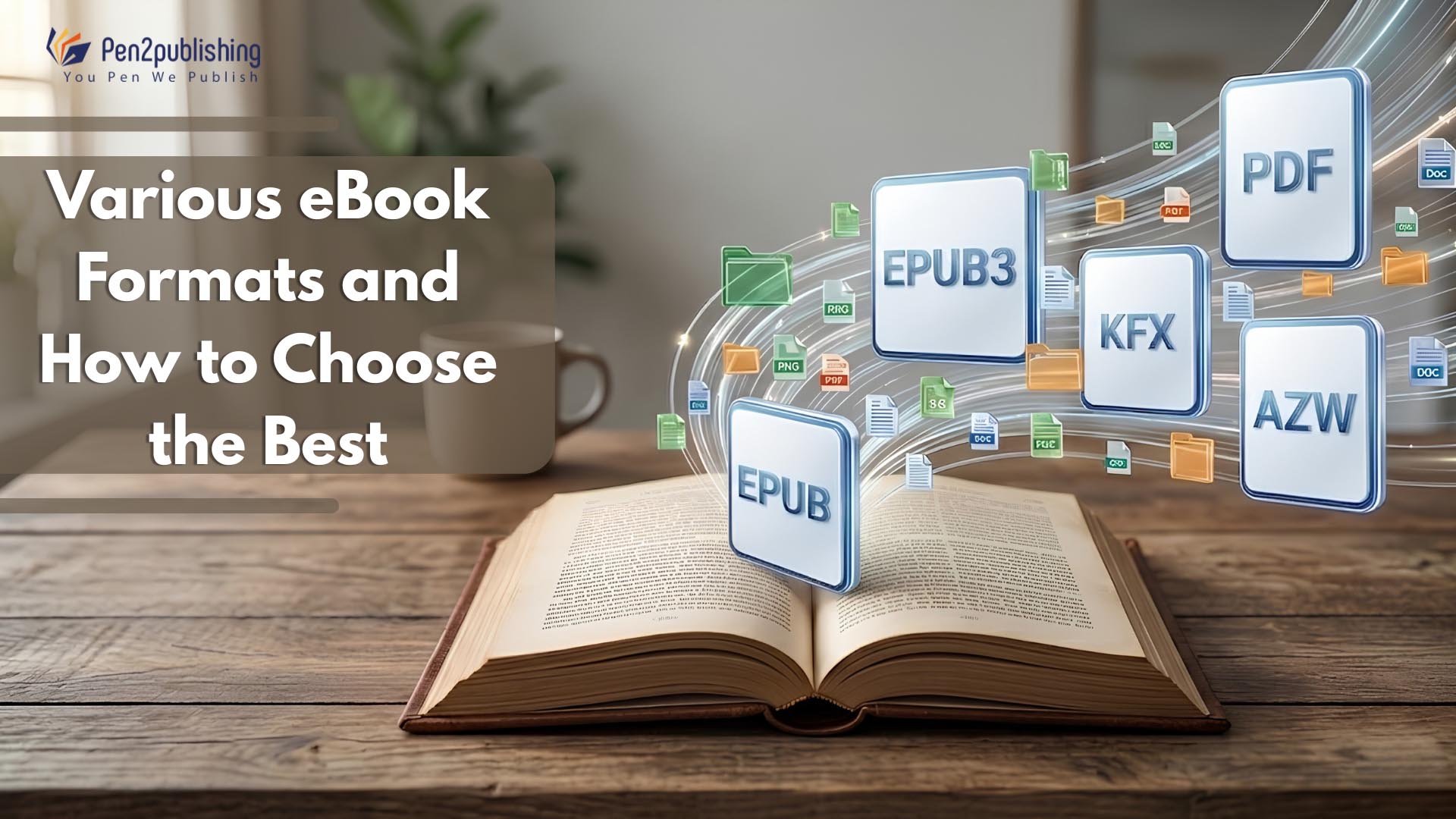
What Are eBook Formats?
An eBook format is a standard file structure that controls how your digital book is saved, presented and read on different devices and applications. It governs everything from the manner in which text flows on the screen, to how images are produced, to whether interactive features work as intended.
Why eBook Formats Matter
The selected format influences three critical aspects: device compatibility and accessibility, publishing platform specifications, and the overall reader experience. A file in an incorrect format may not open on specific devices, be rejected by a publishing platform, or present with distorted layouts that irritate users and elicit unfavorable feedback.
Most Popular eBook Formats
EPUB Format
EPUB is the global industry standard for eBooks. It uses HTML and CSS, which means text and images automatically reflow to fit any screen size. You can read EPUB books on Apple Books, Kobo, the Barnes & Noble Nook, Google Play Books, and a lot of library servers. If you’re publishing broadly across multiple platforms with primarily text-based content, EPUB is almost always the right starting point.
EPUB3 Format
There is a new version of EPUB called EPUB3. You can use it with embedded music, video, JavaScript, and ARIA accessibility features. This is great for anyone who wants to improve eBooks, like people who make kids’ books or curriculum. Libraries and institutional sellers who require accessibility compliance also need EPUB3 more and more.
PDF Format
PDF locks every element to an exact position on the page, making it look identical across all devices. This is ideal for illustrated reference books, textbooks, cookbooks, and technical manuals where layout precision is essential. However, PDFs are poorly suited to mobile reading on a small smartphone screen, readers must pinch-zoom and scroll horizontally, which quickly becomes frustrating.
MOBI Format
MOBI was Amazon Kindle’s original eBook format. Amazon has officially deprecated it and now recommends uploading EPUB or DOCX files to Kindle Direct Publishing (KDP). Authors creating new titles today have little reason to work with MOBI.
AZW and KFX Formats
Amazon has its own Kindle files called AZW and KFX. KFX is the latest format, and it supports better typesetting, Page Flip navigation, and better picture rendering. As soon as you send an EPUB to KDP, Amazon changes it to a KFX file. You don’t need to do this yourself.
Fixed vs. Reflowable Formats
Fixed Layout Formats
When a page has a fixed layout, the text, pictures, and images stay where they are. On all of them, the pattern looks the same. This makes set layouts perfect for picture books, graphic novels, art books, and any other book where the way the text and pictures are placed in space is important to the reading experience.
Reflowable Formats
Reflowable formats treat content as a flexible stream that adapts to any screen size. Readers can adjust font size, switch to dark mode, and use accessibility features without breaking the layout. Smart phones and tablets, which are mostly used to read eBooks these days, work best with forms that can be reflowed. Reflowable is the best method for books, memoirs, and most non-fiction.
Choosing the Best eBook Format

Based on Your Content Type
Fiction and narrative non-fiction work best as reflowable EPUB or EPUB3. Most general non-fiction also performs well in EPUB. Amazon KDP can read both EPUB and DOCX files and instantly change them. For best results, send a clean EPUB file. Apple Books really loves EPUB3, especially for enhanced works. Publishing Platforms Any EPUB or DOCX file can be uploaded to Amazon KDP and the software will convert it for you instantly. For best results, send a clean EPUB file. Apple Books really likes EPUB3, especially for works that have been improved. For wide distribution through aggregators like Draft2Digital or Ingram Spark, a well-structured EPUB works across the broadest range of platforms.
Based on Reader Experience
Consider your audience’s likely devices. Readers on dedicated Kindle hardware, iPad, or smartphone all have slightly different needs. For maximum reach and reader satisfaction, reflowable EPUB works well across all of them. For audiences that include readers with visual impairments, EPUB3 with proper accessibility markup is the professional standard.
Latest eBook Format Trends (2025–2026)
EPUB3 is catching on because it is what more and more people want from publishing – open and interactive. In compliance with the European Accessibility Act, educational companies have made EPUB3 files more accessible to individuals with disabilities. This underscores the need for mobile-optimized reflowable formats, as in many places reading on smartphones has overtaken specialized eReader use. And it’s growing faster to get a manuscript ready for release, with the help of AI-assisted formatting tools. But the quality of the job still needs to be checked by people.
Common eBook Formatting Mistakes
The most common mistake is ignoring whether or not a gadget is compatible. In some apps, a file may look great in one app but have broken space or missing fonts in another. A common mistake is picking the wrong format for the type of content you have. For example, using a fixed layout for a novel with a lot of text or uploading a PDF to a site that expects an EPUB will both produce bad results. Poor file optimization, particularly uncompressed images creates unnecessarily large files that load slowly and may exceed platform upload limits.
eBook Formatting Best Practices
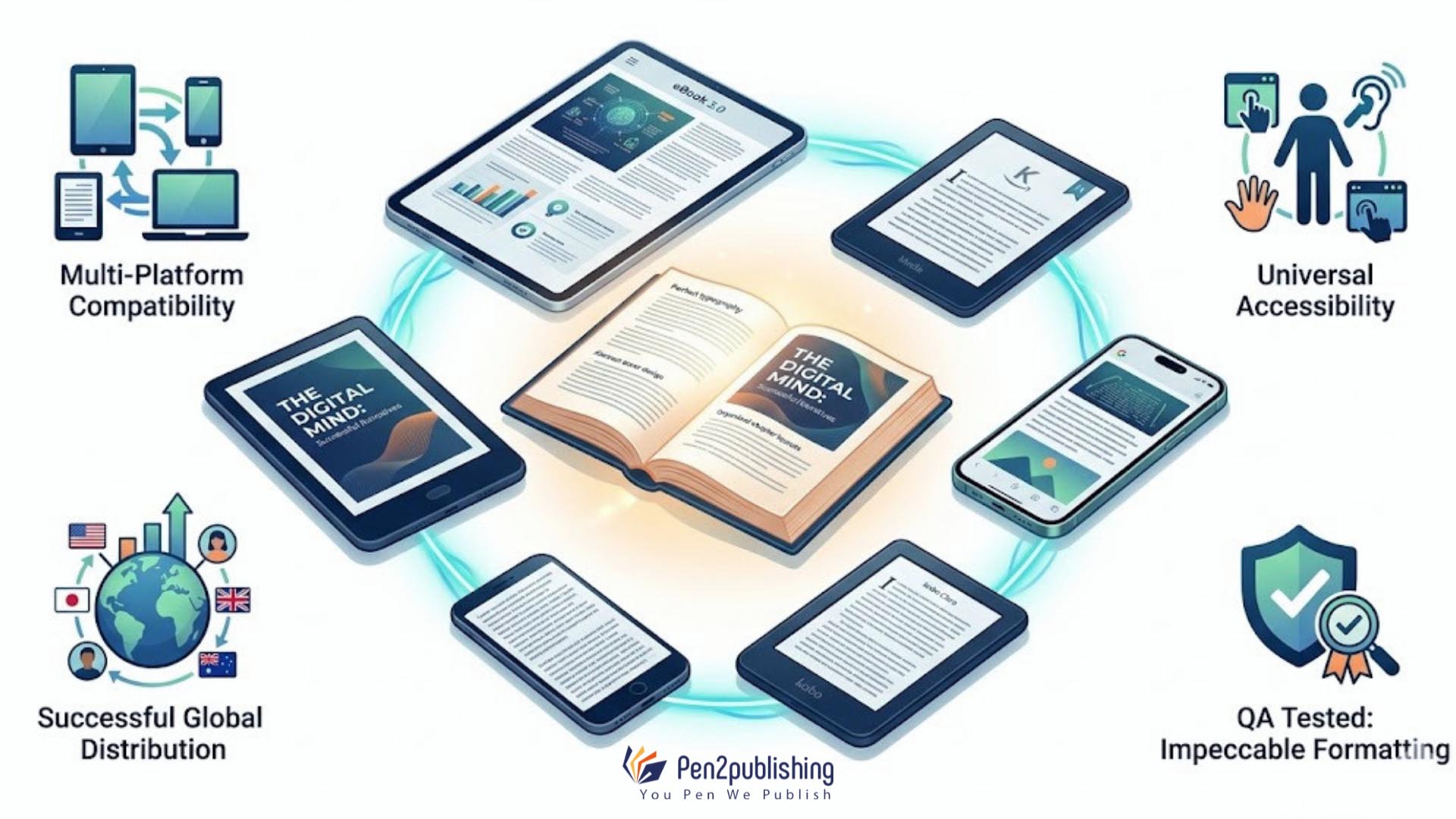
As a publisher, choosing the correct eBook format is one of the most practical decisions you can make. EPUB and EPUB3 meet almost all publishing requirements. EPUB is supported by most platforms, readers and accessibility. PDFs are still good for important content. Professional-quality eBooks are distinguished from annoying eBooks by habits like knowing the difference between fixed and reflowable formats, testing on devices and following platform rules. Get the format right and your viewers will see your work the way you intended it on every device, on every platform.
→Turn Your Manuscript Into a Reader-Ready eBook
FAQs
1. What is the best eBook format for most authors?
Good thing EPUB files can be read on lots of devices and web sites.
2. Is EPUB3 better than plain EPUB?
EPUB3 is better for fascinating eBooks with lots of visuals and with easy readability.
3. Can you use PDF for ebooks?
Yes, PDFs are useful for books that have a defined layout, including recipes, manuals and material with photos.
4. Does MOBI still get used for posting on Kindle?
No, Amazon no longer suggests MOBI files but instead EPUB or DOCX files.
5. What are the reasons testing eBook formats is something you must do?
You can test your eBook before you share it to ensure that it will look good on all of the different platforms, apps and devices.